Repository workflow

Use pixal3d github workflows to explore 3D creation

A GitHub-oriented path makes pixal3d easier to understand when you want to inspect project context, organize references, and move from an idea toward a usable 3D result. Start with a clear asset brief, then hand the task to the generation workflow.

Free to start · no signup

Related paths

Use the route that matches your starting point: repository context, model files, or a specific generation interface.

Know the boundaries

Limits and edges

A GitHub reference can clarify a workflow, but it does not remove every technical or creative constraint around 3D generation.

  • A repository is not a finished asset library

    Project files, examples, and documentation may explain the method without providing a production-ready model for your exact brief.

    WorkaroundUse the repository to learn the workflow, then generate or refine a dedicated asset from a precise description.

  • Hardware requirements can vary

    Local experiments may depend on available memory, graphics support, runtime versions, or compatible model files.

    WorkaroundBegin with the hosted generation path, or test a smaller asset before attempting a detailed scene.

  • Generated geometry still needs review

    Thin parts, hidden surfaces, repeated details, and object scale can need manual inspection after generation.

    WorkaroundRequest simple silhouettes first and check topology, proportions, and separable parts before export.

  • GitHub activity can change over time

    Branches, examples, dependencies, and instructions may shift, so an old reference may not match the current workflow.

    WorkaroundRead the latest project notes and treat version details as part of the setup, not as permanent guarantees.

Three clear stages

How the workflow works

The simplest route separates discovery from creation, so you can use repository information without losing sight of the asset you actually need.

  1. 1

    Define the asset

    Write down the subject, style, camera view, important parts, material cues, and whether the result should be one object or several pieces.

  2. 2

    Trace the relevant workflow

    Use project notes, examples, or model references to understand which generation path fits the brief and which constraints need attention.

  3. 3

    Generate and inspect

    Send the refined brief into the 3D workflow, review the result from several angles, and revise the description when structure or detail is missing.

At a glance

The workflow at a glance

These checkpoints keep a GitHub-led exploration practical instead of turning repository browsing into a substitute for making the asset.

1 Start with one focused object or scene description.
1 brief
2 The goal is a model you can inspect from multiple directions.
3D output
3 Review silhouette, separable parts, and surface detail before relying on the result.
3 checks

Visual checkpoint

From repository context to 3D output

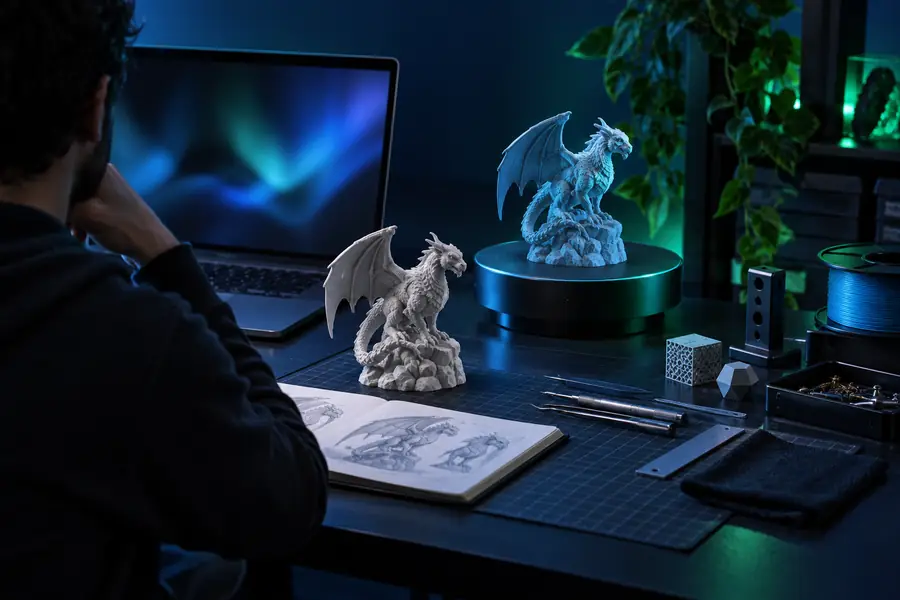
A useful workflow moves from a simple reference idea toward a model with clearer structure, materials, and presentation.

  • Reference brief
  • Generated model

The comparison is directional: repository context informs the process, while the final result still depends on the prompt, model path, and review.

Simple reference concept for a stylized 3D object
Rendered 3D model showing shape and surface detail

Practical users

Who this workflow helps

Different users can use pixal3d for different reasons, but each benefits from keeping the repository question separate from the asset goal.

Indie game creator

You need a quick prop concept for a blockout, but you are unsure which project references matter first.

A focused brief and repository-led workflow help you reach a reviewable object before investing in final art.

pixal3d huggingface

Technical artist

You want to compare model packaging, examples, and likely runtime constraints before building a repeatable process.

The GitHub route gives you a place to organize assumptions, then the [pixal3d gguf] path can narrow the packaging question.

pixal3d gguf

ComfyUI experimenter

You prefer visible nodes and parameter changes instead of treating generation as a black box.

Repository context can clarify the experiment while [pixal3d comfyui] provides a more inspectable workflow direction.

pixal3d comfyui

3D learning student

You are learning how an open project, model reference, and generated output relate to one another.

A small asset brief makes the process easier to follow and gives you a concrete result to inspect from every angle.

Hugging Face model references

Common questions

Pixal3d GitHub FAQ

Answers for visitors using GitHub as the starting point for understanding a pixal3d-related 3D workflow.

It is useful for people who want project context before trying a 3D generation workflow. Repository materials can help explain examples, dependencies, model references, or the intended process, but they are not automatically a finished asset for every request.

GitHub itself is primarily a place to inspect code, documentation, examples, and project files. To create a model, you still need a compatible generation workflow, whether that is a hosted tool or a correctly configured local environment.

Basic browsing is accessible, but local execution may require comfort with versions, model files, runtimes, and hardware limits. If setup becomes the main obstacle, begin with a hosted prompt workflow and use the repository as background context.

No. A repository may be experimental, incomplete, version-sensitive, or focused on research rather than polished production assets. Inspect the generated geometry and materials, test the workflow on a small object, and refine the result before using it in a final project.

Start creating
Start creating